


How to Maintain Your Volvo Excavator Cooling System: The Complete Aussie Guide

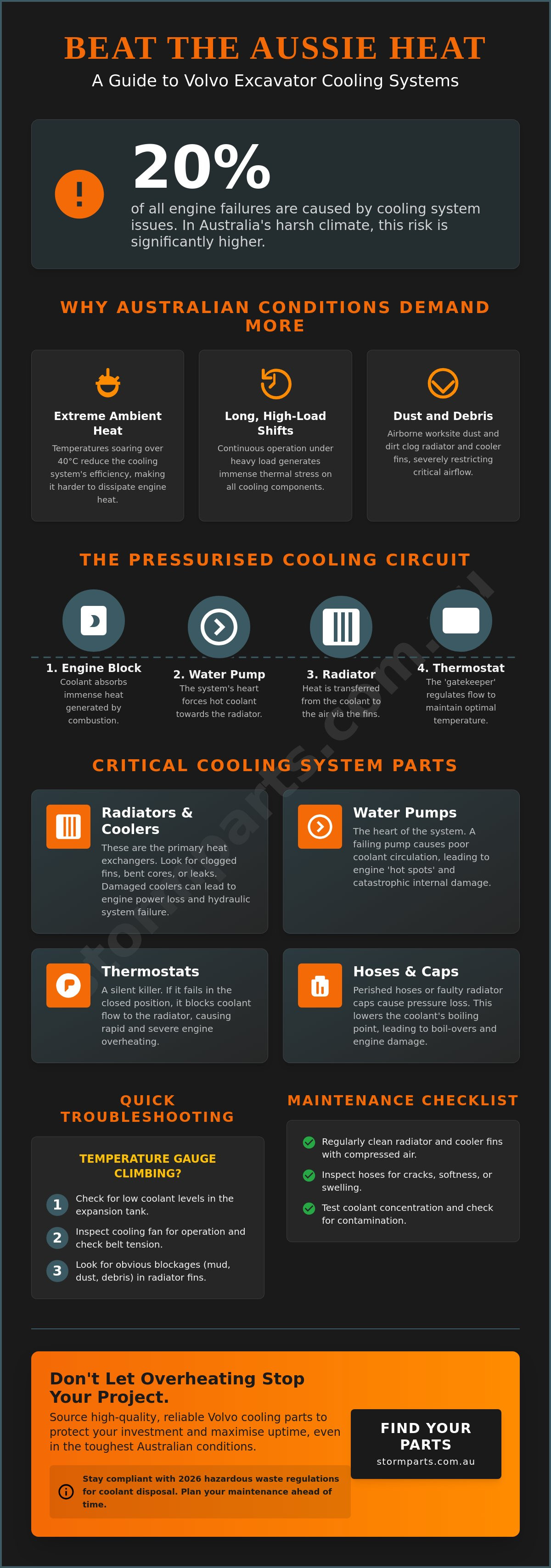
Did you know that 20% of engine failures globally are caused by cooling system issues? In the harsh Australian climate, that risk feels even higher when your machine is baking under a 40-degree sun. You've likely felt that gut-sinking feeling when the temperature gauge climbs and your project stalls. Investing in high-quality Volvo excavator cooling system parts is the first step toward avoiding those expensive, unscheduled breaks in productivity!
We understand that downtime on-site isn't just frustrating; it's a massive hit to your bottom line. You want a machine that runs cool from dawn till dusk without worrying about the high cost of engine rebuilds. This guide provides the expert maintenance tips you need to safeguard your equipment against the Aussie heat. We'll walk you through essential maintenance intervals, explain the 2026 hazardous waste regulations for coolant disposal, and show you how to source reliable components even in remote regional areas.
Key Takeaways
Master the mechanics of your machine's pressurized cooling system to ensure it maintains thermal equilibrium during long shifts in the heat.
Identify the critical Volvo excavator cooling system parts, such as water pumps and radiators, that require proactive replacement to avoid costly site downtime!
Develop a logical troubleshooting sequence to diagnose rising temperatures quickly before they result in a catastrophic engine failure.
Establish a practical maintenance checklist designed to help your gear withstand the unique challenges of the Australian climate.
Learn how to source high-quality replacement components locally while staying compliant with the latest Australian hazardous waste regulations.
Table of Contents
Understanding the Volvo Excavator Cooling System
Volvo EC-series excavators are engineered for high-performance output, but that power generates immense internal heat. To manage this, Volvo utilises a sophisticated pressurized closed system. This design ensures that the coolant remains in a liquid state even when temperatures soar well above the standard boiling point of water! The heart of this operation is the coolant pump, which acts as the primary driver for maintaining thermal equilibrium. It works by circulating fluid through the engine block and cylinder heads, absorbing heat from the combustion process and moving it toward the radiator.
This thermal management process is comprehensive. It doesn't just protect the engine block; it also involves heat transfer between engine oils and the external radiator through dedicated oil coolers. Modern engine cooling systems rely on this constant, regulated flow to prevent catastrophic component failure. One clever feature of these systems is the bypass circuit. When your engine is cold, the thermostat directs coolant to bypass the radiator entirely. This allows the engine to reach its optimal operating temperature quickly, which reduces wear and improves fuel efficiency from the moment you start your shift!
The Science of Thermal Management in Heavy Equipment
The system manages fluid expansion through a dedicated expansion tank. As the coolant heats up and expands, the tank provides the necessary room, while pressure relief valves in the cap ensure the internal pressure stays within safe limits. The thermostat serves as the gatekeeper of the circuit, precisely regulating the coolant path based on real-time temperature needs. A pressurized cooling system works by sealing the coolant in a closed loop under pressure, which significantly increases the boiling point of the liquid to prevent overheating during high-load operations. This ensures your machine doesn't boil over when you're pushing it hard on a tight deadline!
Why Australian Conditions Demand More from Your Cooling
Operating in regions like Western Queensland or the Pilbara presents a unique set of challenges for any operator. When ambient temperatures hit the high 40s, the temperature differential between the radiator and the outside air drops, making heat exchange much harder. Dust and debris are also constant threats on Aussie sites. They clog the radiator fins and choke the airflow, which can lead to rapid overheating even if your Volvo excavator cooling system parts are relatively new. The cooling fan plays a vital role here by providing forced induction airflow, pulling massive volumes of air through the radiator to strip away heat. Keeping these components in top shape is the only way to ensure your excavator stays productive in the red dirt.
Essential Volvo Excavator Cooling System Parts
A high-hour machine demands more than just a quick oil change. As your excavator clocks up thousands of hours on Aussie sites, the internal components face constant thermal stress. Identifying the right Volvo excavator cooling system parts before they fail is the difference between a productive week and an expensive engine rebuild! While the radiator is the most visible part, the entire cycle relies on a network of pumps, coolers, and seals working in perfect harmony.
The water pump is the muscle of this operation. It's responsible for pushing coolant through the engine at high velocity. If the internal impeller blades become pitted or the bearings start to fail, your circulation drops. This leads to hot spots within the engine block that a temperature gauge might not catch until it's too late. Similarly, the hoses and radiator caps are critical for maintaining the system pressure we discussed earlier. A perished seal or a weak spring in the cap allows pressure to escape, which lowers the boiling point and invites cavitation damage.
Radiators and Charge Air Coolers
It's easy to confuse the various cooling cores stacked at the rear of your machine. The main radiator handles engine coolant, while the hydraulic oil cooler prevents your oil from thinning out and losing lubrication properties. For turbo-charged Volvo engines, the charge air cooler, or intercooler, is vital. It cools the intake air, making it denser and allowing for more efficient combustion. Look for signs of core clogging or external fin damage, such as bent aluminium or mud-packing from site dust. If you're noticing a loss of power or increased fuel consumption, it's worth checking your Volvo excavator parts to ensure these coolers are breathing correctly.
Thermostats and Water Pumps
A failing thermostat is a silent killer. If it gets stuck in the closed position, it can cook an engine in minutes by blocking the path to the radiator. You should also keep a close eye on the water pump's weep hole. Any sign of moisture there suggests the internal seal is gone. Using the correct coolant mixture is just as important as the hardware itself. Volvo machines from 2006 onwards typically require the yellow VCS Organic Additive Technology coolant, while older models use the green hybrid-type. Mixing these or using the wrong ratio leads to internal corrosion and scaling, which eventually chokes your new parts from the inside out.
How to Troubleshoot Overheating in Your Volvo Excavator
Seeing the temperature gauge climb while you're mid-trench is enough to ruin any operator's day. Before you shut down and call for a float, a logical diagnostic routine can often identify the culprit quickly. Start with the basics. A visual inspection of the radiator and fan guard is your first line of defence. On dusty Australian sites, it's common for the radiator fins to become "blinded" by a mixture of dust and hydraulic oil mist. This prevents the heat exchange we discussed earlier and leads to rapid overheating. Check the fan guard as well; any deformation can disrupt the forced induction airflow needed to keep things cool.
The colour and consistency of your coolant tell a story about the health of your engine. If you're using the correct Volvo excavator cooling system parts and fluids, your coolant should be clear and vibrant. For machines built after 2006, you're looking for that distinct yellow VCS colour. If the fluid appears cloudy, dark, or has a "milkshake" consistency, you're likely dealing with oil contamination from a failed oil cooler or a head gasket issue. Catching these signs early prevents a total engine seizure!
Step-by-Step Diagnostic Routine
Always begin by checking coolant levels and expansion tank pressure safely. Never remove a cap when the engine is hot; wait for it to cool down to avoid serious burns. Inspect the belt tension on the water pump and fan drive. A loose or glazed belt will slip under load, meaning your pump won't move enough fluid to maintain thermal equilibrium. For a truly professional check, use a refractometer to measure the anti-freeze concentration and corrosion resistance. This ensures your mixture is up to the task of protecting your internal engine components from cavitation and scale build-up.
Identifying Internal vs External Leaks
If you're losing coolant but can't see a puddle on the ground, it's time for a pressure test. This involves pressurising the system to its rated limit (usually found on the radiator cap) and watching the gauge. External leaks often leave a tell-tale crusty residue around hoses or seals. Internal leaks are more sinister. Look for white smoke from the exhaust or a sweet smell in the cab. The presence of carbon monoxide in the coolant is a definitive indicator of a failed cylinder head gasket or a cracked engine block. If you suspect an internal failure, it's critical to inspect your engine blocks and cylinder heads for cracks before simply replacing Volvo excavator cooling system parts and hoping for the best.
Maintenance Checklist: Keeping Your Cooling System Site-Ready
A proactive maintenance routine is the only way to stay ahead of the brutal Aussie heat. Don't wait for the alarm to sound in the cab before you pay attention to what's happening under the hood! Consistency is your best friend here. By following a structured schedule, you can catch minor wear on your Volvo excavator cooling system parts before it transforms into a project-stopping failure. A well-maintained system ensures your engine runs at peak efficiency, which saves you a fortune in fuel and long-term repair costs.
Daily: Check the coolant level in the expansion tank and perform a quick visual scan for fresh leaks. Clear any loose vegetation or debris from the fan guard.
Weekly: Inspect the fan blades for chips, cracks, or signs of stress. If your machine is equipped with a reversible fan, cycle the mechanism to ensure it's clearing the cores effectively.
Monthly: Check the tension and condition of the water pump drive belts. Look for glazing or fraying that could lead to a sudden snap on-site.
Annually (or every 2,000 hours): Plan for a full system flush and coolant replacement to maintain your corrosion protection.
Cleaning and Debris Management
In high-traffic QLD mining or construction environments, dust is your primary enemy. It builds up in the radiator fins and creates an insulating blanket that traps heat. When cleaning, always use low-pressure compressed air or water. High-pressure washers can easily flatten the delicate aluminium fins, which permanently restricts airflow! Direct your spray or air blast straight through the core, not at an angle, to push debris out the way it came in. Make checking the fan guard a non-negotiable part of your morning walk-around to prevent larger objects from damaging the fan or the radiator core.
Fluid Management and Corrosion Prevention
Never mix different brands or types of anti-freeze. Combining a standard green coolant with a yellow VCS-2 Organic Additive Technology (OAT) fluid can cause a chemical reaction that leads to "gel" formation. This thick sludge will quickly choke your oil coolers and intercoolers! High-quality corrosion inhibitors are also essential for protecting Volvo cylinder liners from cavitation pitting. When you do a full coolant change, remember that as of June 2026, Australian EPA regulations require all used coolant to be handled by a licensed hazardous waste provider. Always bleed the air from the system after a refill to prevent air pockets, as these cause localized hot spots that can crack a head. For the best results, always use high-standard Volvo excavator cooling system parts to maintain the integrity of your pressurized circuit.
Sourcing Reliable Volvo Cooling Parts in Australia
Finding the right Volvo excavator cooling system parts shouldn't be a stressful ordeal. When your machine is down, every hour spent waiting for a shipment from overseas is profit lost. Sourcing from a local specialist like Storm Parts Australia gives you the peace of mind that comes with expert technical support and high-quality components. We're dedicated to the restoration of your productivity by keeping a massive range of stock ready for immediate dispatch! Our goal is to be more than just a vendor; we're your proactive partner in keeping your fleet operational during the hottest months of the year.
We know that sourcing specific components in regional Australia can be a challenge. That's why we've built our business around being a helpful resource for operators who need reliable parts without the long lead times. Whether you're looking for water pumps, oil coolers, or the specific thermostats we discussed in earlier sections, we have the inventory to get you back to work. Our team understands the operational pressures you face on-site, and we're here to ensure your cooling system remains in peak condition.
Genuine vs. Non-Genuine: Making the Right Call
Deciding between genuine Volvo construction parts and aftermarket options often depends on your fleet's age and your specific budget. For newer machines still under manufacturer warranty, investing in genuine components is often the preferred route to maintain your coverage. However, for older excavator fleets, high-quality non-genuine parts provide a brilliant, cost-effective alternative. We ensure that every aftermarket cooling component we supply is built to handle the extreme pressures of a pressurized closed system. You get the reliability you need without the "genuine" price tag, allowing you to keep your older gear running cool for years to come. We take the guesswork out of the process by only stocking non-genuine parts that meet our strict quality standards.
The Storm Parts Australia Advantage in Toowoomba
Our location in Toowoomba allows us to serve as a dependable neighbour for operators across Queensland and the rest of the country. We offer more than just a parts list; we provide a "can-do" attitude and deep specialised knowledge of Volvo, Caterpillar, and Komatsu engines. Whether you're working in the humid tropics or the dry outback, our team can help you select the exact Volvo excavator cooling system parts required for your specific model. We understand the urgency of the industry, which is why we focus on fast shipping and efficient service to get your machine back on-site. Contact Storm Parts Australia today for a quote on your Volvo cooling parts and experience the difference that local expertise and a passion for the industry can make for your business!
Secure Your Uptime in the Aussie Heat
Protecting your investment starts with a commitment to proactive maintenance. By following a structured checklist and understanding how your machine handles thermal stress, you've already taken the biggest step toward avoiding catastrophic engine failure. Small daily habits, like checking the fan guard and monitoring fluid levels, keep your excavator productive when the temperature climbs. High-quality Volvo excavator cooling system parts are the backbone of this reliability, ensuring your engine stays within safe limits during those long shifts in the red dirt.
As a specialist supplier based in Toowoomba, Storm Parts Australia is here to support you with both genuine and non-genuine Volvo components. We serve all of Queensland with expert technical support to ensure you get the exact fit for your heavy machinery engines. Don't let a faulty water pump or a clogged radiator stall your project! Browse our range of Volvo Excavator Cooling System Parts today to find the reliable solutions you need. Let's keep your gear running cool all day long!
Frequently Asked Questions
Why is my Volvo excavator overheating even though the coolant level is full?
Overheating despite a full expansion tank usually points to an airflow restriction or an internal circulation issue. On dusty Australian job sites, it's common for the radiator fins to become "blinded" by a thick layer of dust and oil mist, which prevents the heat exchange process. You should also check for a failing fan clutch or a thermostat that isn't opening fully, as these will restrict the system's ability to shed heat even if the fluid levels are perfect.
How often should I change the coolant in my Volvo excavator?
You should generally replace your coolant every 2,000 operating hours or once a year, whichever occurs first. Regular changes are vital because the corrosion inhibitors in the fluid break down over time, leaving your engine block and cylinder liners vulnerable to cavitation pitting. Using a refractometer during your monthly checks will help you monitor the concentration and ensure your machine remains protected between full service intervals.
Can I use tap water in my Volvo cooling system in an emergency?
Avoid using tap water unless it's a dire emergency to move the machine to a safe location. Tap water contains minerals that create scale deposits and cause rapid internal corrosion within the engine's water jackets. If you're forced to use it, you must flush the entire system and refill it with the correct demineralised water and coolant mixture as soon as possible to prevent permanent damage to your Volvo excavator cooling system parts.
What are the signs of a failing Volvo water pump?
Common signs include coolant leaking from the pump's weep hole or a noticeable rise in engine temperature during standard operations. You might also hear a high-pitched squeal or a low rumbling sound, which indicates that the internal bearings are failing. If you notice any play in the pump pulley when the drive belt is removed, the unit is nearing the end of its life and needs to be replaced before it fails completely on-site.
Is it better to repair or replace a leaking Volvo radiator?
Replacing the radiator is almost always the better option for modern excavators. While older copper-brass units could be soldered, modern aluminium cores are incredibly difficult to repair once they leak from the header tanks or core joints. A new replacement ensures your machine has 100% cooling capacity and eliminates the risk of a patch failing when you're working in a remote regional area.
What is the correct coolant mixture for Volvo construction equipment in Australia?
Most Volvo machines built after 2006 require a 50/50 mixture of Volvo Coolant VCS (the yellow Organic Additive Technology type) and demineralised water. This specific ratio provides the best balance of heat transfer and boiling point protection for the harsh Australian climate. Don't mix this with the older green hybrid-type coolant, as the chemical reaction can create a thick gel that chokes your oil coolers and intercoolers.
How do I know if my excavator thermostat is stuck closed?
A thermostat that's stuck closed will cause your engine temperature to spike rapidly while the radiator remains relatively cold to the touch. Because the thermostat is blocking the path to the radiator, the coolant stays trapped in the engine block and heats up quickly. If your temperature gauge is hitting the red but the radiator isn't radiating significant heat, it's a clear sign that the thermostat has failed and needs immediate attention.
Does Storm Parts Australia stock cooling parts for older Volvo models?
Yes! We carry a comprehensive range of Volvo excavator cooling system parts for both the latest EC-series machines and older models still working across Australia. Our inventory includes everything from water pumps and thermostats to radiator caps and seals. We offer both genuine and high-quality non-genuine options to help you keep your older fleet running cool and productive without the high cost of a dealership-only solution.
Comments